One Step at a Time: Benon’s Story
One Step at a Time: Benon’s Story
This is the story of a man I met in the rain.
This is the story of a man I met in the rain.
One day, while in the hills of Kisoro, a sudden storm rolled in. Torrential rain triggered a near-landslide, and Edson and I were forced to take shelter until it passed.
When we finally made our way back down the mountain, on a motorbike while the rain was still falling but not as heavy, we passed a man sitting in the mud breaking rocks for payment.
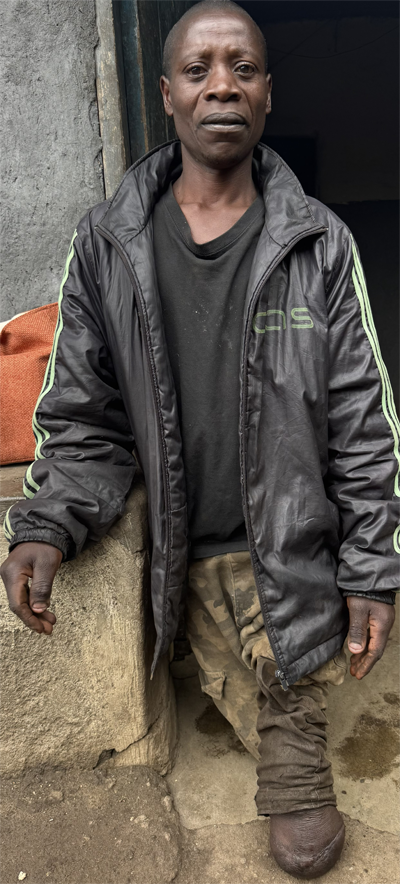
He had no legs.
In the few seconds it took to pass him, I watched him drag himself forward through thick mud just to reach the next rock.
As I lay in bed that night, reflecting on the day, I couldn’t get his image out of my head. So the next day, I asked Edson to take me back.
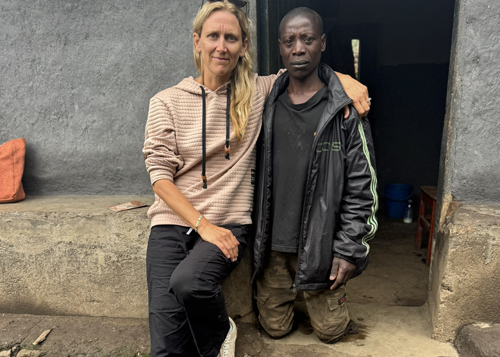
That man is Benon.
I couldn't leave his story there
The Journey for Help
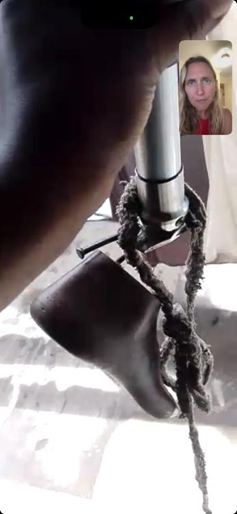
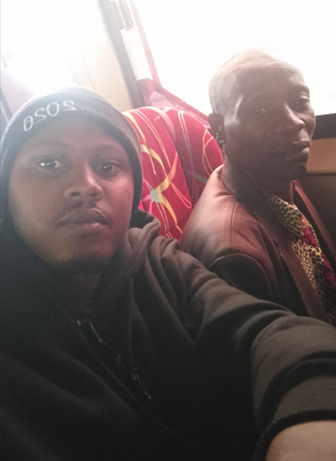
After meeting him, I knew I couldn’t leave his story there. I asked my community for help. And they answered. Almost overnight we had raised more than I needed for new prosthetic legs. They were to be custom-made for his body, could withstand the weather and came with the fitting and rehabilitation he would need to learn to walk again. What followed was a long and difficult journey to Mbarara to meet Dr Wence, the prosthetist responsible for building his new legs. The trip itself was exhausting. It began with a motorbike ride, with Edson carefully riding behind Benon to make sure he didn’t fall. Then came a long wait for the bus to fill, followed by hours on the road. Partway through the journey, the bus broke down. More waiting. More uncertainty. More exhaustion. By the time they arrived, the day had stretched into night. When I asked Edson how Benon was, he said only one word: ”Quiet”
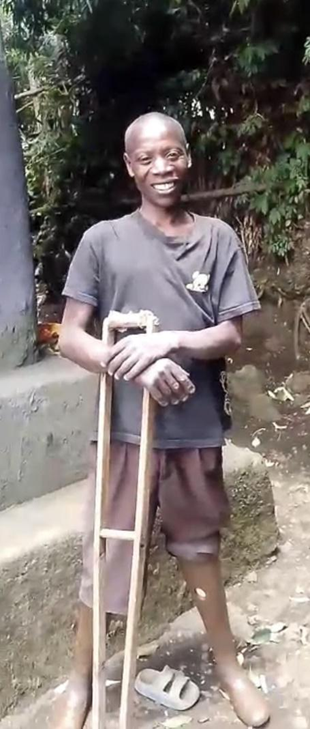
Benon’s story is not a finished one.
A Life Still in Progress
He is still adjusting. Still building strength. Still learning how to move through a world that has not changed — but how he moves through it has. There will be ongoing adaptation. Ongoing support. Ongoing learning. But for the first time in a long time, he is not moving forward on the ground.
With gratitude,
Carly Nzvimbo
Founder & Executive Director of
Ripples of Change Uganda